Why Cloud-Based Church Management Systems Are the Future (2026 Guide)
Summary
Churches today need more than spreadsheets and desktop software. As online giving, mobile engagement, and digital communication become essential, cloud-based church management systems are helping churches simplify administration, improve security, and support growth.
Church administration has changed dramatically over the last decade. Not long ago, many churches relied on spreadsheets, filing cabinets, desktop software, and paper records to manage membership, giving, attendance, and communication. While those tools may have worked in the past, they struggle to meet the needs of modern churches.
Today's congregations expect online giving, mobile access, instant communication, self-service member portals, and secure access from anywhere. Church leaders need better visibility into ministry activity without spending hours on administration.
This is why cloud-based church management systems have become the preferred choice for churches of every size. Whether you're a church plant, a growing congregation, or an established ministry, cloud technology is changing how churches operate, engage members, and steward resources.
In this guide, we'll explore what a cloud-based church management system is, why churches are moving away from traditional software, and why cloud solutions are becoming the standard for church management in 2026 and beyond.
What Is a Cloud-Based Church Management System?
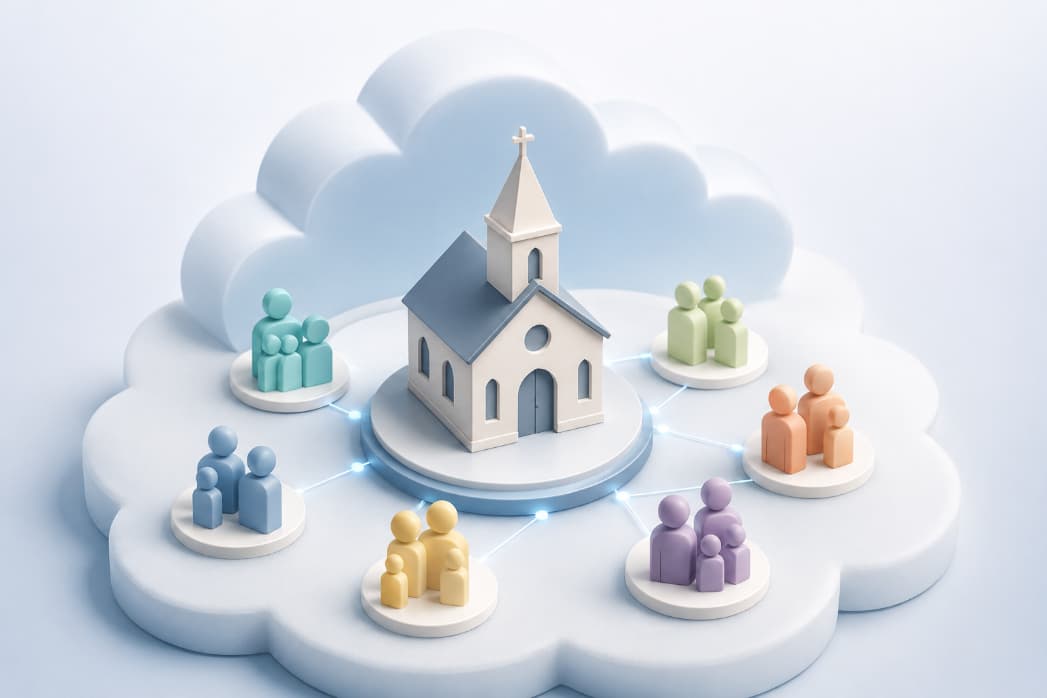
A cloud-based church management system (ChMS) is software that stores and manages church data online rather than on a local computer or church server.
Instead of installing software on a specific device, church staff and approved volunteers can securely access the platform through a web browser or mobile app from anywhere with an internet connection.
A cloud-based church management system typically includes:
Member and family management
Attendance tracking
Online giving and donation management
Volunteer scheduling
Event management
Church communication tools
Reporting and analytics
Mobile apps for members and leaders
Because everything is hosted in the cloud, updates, backups, security patches, and maintenance are handled automatically by the software provider.
Why Churches Are Moving Away from Traditional Software
Many churches still use a combination of spreadsheets, desktop software, paper records, and disconnected applications.
While this approach may seem inexpensive initially, it often creates challenges such as:
Duplicate data across multiple systems
Lost or outdated records
Limited access for staff and volunteers
Manual reporting processes
Security vulnerabilities
Expensive software upgrades
Difficulty supporting remote ministry teams
As churches grow, these challenges multiply.
A volunteer updates contact information in one spreadsheet but not another. A finance administrator stores donation records separately from member records. Attendance reports require manual compilation. Communication lists become outdated.
Eventually, administration begins consuming time that could be spent on ministry.
The Biggest Benefits of Cloud-Based Church Management Systems1. Access Your Church Data Anywhere
One of the greatest advantages of cloud technology is accessibility.
Church leaders are no longer tied to an office computer.
Whether you're:
Meeting a new visitor at a coffee shop
Following up with a member after service
Working remotely
Traveling for ministry
you can securely access church information whenever you need it.
This flexibility is particularly valuable for churches that rely heavily on volunteers and part-time staff.
2. Improved Collaboration Across Ministry Teams
Modern ministry requires collaboration.
Pastors, administrators, ministry leaders, volunteers, finance teams, and event coordinators often need access to different pieces of information.
Cloud-based systems allow teams to work from a single source of truth.
Rather than emailing spreadsheets back and forth, everyone works from the same up-to-date information.
This reduces confusion, eliminates duplicate work, and improves accountability.
3. Better Data Security
Many church leaders assume keeping data on a local computer is safer than storing it online.
In reality, the opposite is often true.
Leading cloud providers invest heavily in:
Data encryption
Secure infrastructure
Continuous monitoring
Disaster recovery
Automatic backups
Multi-factor authentication
Most churches simply cannot match these security investments internally.
Cloud systems also reduce the risk of losing critical data due to hardware failures, theft, or accidental deletion.
4. Automatic Backups and Updates
Traditional software often requires manual backups and periodic upgrades.
Unfortunately, these tasks are easy to forget until something goes wrong.
Cloud-based platforms automatically:
Back up data
Apply security updates
Improve features
Fix bugs
Churches always have access to the latest version without expensive upgrade projects or technical support contracts.
5. Better Member Engagement
Churches today need more than a database.
They need tools that help people stay connected.
Cloud-based church management systems often include:
Member mobile apps
Event registration
Online giving
Prayer requests
Group communication
Volunteer scheduling
Self-service profile updates
These tools help members engage with church life throughout the week rather than only on Sundays.
6. Supports Growing Churches
Growth creates complexity.
As attendance increases, churches need better ways to manage:
Families
Volunteers
Giving
Events
Communication
Ministry teams
Cloud-based platforms scale far more easily than spreadsheets and disconnected tools.
A church can move from 50 members to 500 members without rebuilding its administrative processes from scratch.
7. Lower IT Costs
Maintaining servers and desktop software requires time, expertise, and money.
Cloud-based systems eliminate many traditional IT expenses, including:
Server purchases
Hardware maintenance
Software installations
Backup infrastructure
Upgrade projects
This allows churches to invest more resources into ministry rather than technology maintenance.
Why Cloud-Based Systems Are the Future of Church Management
The future of ministry is increasingly digital.
Members expect:
Mobile access
Online giving
Digital communication
Self-service experiences
Real-time updates
At the same time, church leaders need:
Better reporting
Greater visibility
Stronger security
Improved efficiency
Cloud-based church management systems bring all these requirements together in a single platform.
As technology continues to evolve, cloud systems also make it easier to adopt new capabilities such as advanced analytics, automation, integrations, and AI-powered tools without major infrastructure changes.
For most churches, the question is no longer whether to move to the cloud.
The question is which cloud-based platform best supports their ministry goals.
How Churchease Helps Churches Thrive in the Cloud
Churchease is a cloud-based church management system designed for modern churches that want to simplify administration and focus more on ministry.
With Churchease, churches can manage:
Members and families
Giving and donations
Events and registrations
Attendance tracking
Volunteer scheduling
Communication
Church finances
all from one secure platform.
Church leaders gain access to real-time information from anywhere, while members stay connected through the Ease mobile app.
Instead of juggling multiple systems, churches can operate from a single source of truth that grows alongside their ministry.
For a deeper look at how modern church management software can improve ministry effectiveness, read our guide on Supercharge Church Operations with Churchease ChMS.
If you're serving churches in the United Kingdom, you may also find our UK Pastor's Buyer's Guide to Church Management Software (2026) helpful when evaluating cloud-based solutions and compliance requirements.
Final Thoughts
Cloud-based church management systems are no longer simply a technology trend. They are becoming the foundation of effective church administration.
By providing secure access, better collaboration, stronger member engagement, automatic updates, and lower IT costs, cloud solutions help churches spend less time managing systems and more time serving people.
The future of church management is connected, mobile, secure, and accessible from anywhere. For churches looking to grow and operate efficiently in 2026 and beyond, a cloud-based church management system is no longer optional—it is quickly becoming essential.
For further reading, see the Pew Research Center on religion.