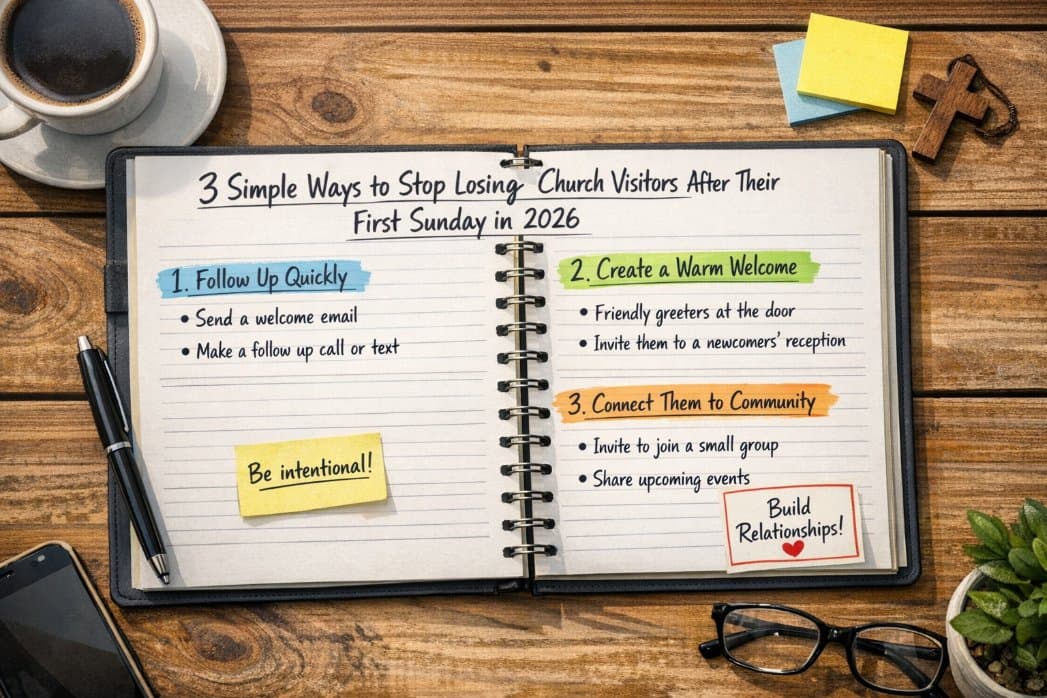
3 Simple Ways to Stop Losing Church Visitors After Their First Sunday in 2026
Summary
Most first-time church visitors decide whether to return within days of their visit. Research shows that timely follow-up and clear next steps greatly increase the chance of a second visit. Without a simple system, many guests quietly disappear. Here are three proven ways churches can reduce first-time visitor drop-off.
Most first-time church visitors decide whether to return within the first few days after their visit. Studies on guest retention consistently show that timely follow-up and clear next steps significantly increase the likelihood of a second visit. When churches lack a system, visitors quietly disappear. This highlights how to improve church member engagement from the very first interaction.
Here are three simple, proven ways churches can reduce first-time visitor drop-off in 2026.
1. Capture visitor information in a low-pressure way
Many churches miss follow-up opportunities because guest information is never captured or is collected in a way that feels uncomfortable.
What works
A short digital connect form accessed by QR code
Minimal fields: first name and one contact method
A clear purpose, such as prayer requests or getting connected
Why it matters
Visitors are more likely to share information when the process is fast, optional, and respectful.
How Churchease helps
Churchease provides QR-code visitor forms that automatically create people records, tag first-time guests, and prevent information from being lost in spreadsheets.
2. Follow up within 24 to 36 hours with one personal message
Research across church leadership organizations shows that follow-up speed directly affects return rates, which is why implementing a detailed 7-day follow-up plan can significantly improve visitor retention. Waiting more than a few days sharply reduces the chance of a second visit.
What works
One personal message within 24 hours
A simple thank-you and offer of help
A real person sending the message, not an automated blast
Why it matters
Fast, personal follow-up builds trust without pressure, and learning how to improve message engagement ensures your follow-up efforts have maximum impact.
How Churchease helps
Churches can send texts or emails to first-time visitors, assign follow-up tasks, and track completion so no guest is forgotten.
3. Offer one clear next step toward connection
Today’s attendance patterns are less consistent, especially among younger adults. Churches that retain visitors provide a clear pathway to belonging that does not rely on weekly attendance.
What works
One primary next step, such as a welcome meet-up or newcomers lunch
A simple RSVP option
A personal invitation, not multiple announcements
Why it matters
People return when they form relationships, not when they memorize processes.
How Churchease helps
Churchease allows churches to manage welcome events, track RSVPs, assign hosts, and group interested visitors for ongoing connection.
The takeaway
Churches do not lose visitors because of weak preaching or programming, and understanding broader member retention challenges can help churches create lasting connections with their entire congregation. They lose visitors because follow-up is slow, inconsistent, or unclear.
In 2026, churches that retain guests do three things well:
Capture visitor information simply
Follow up quickly and personally
Provide one clear path to connection
Churchease supports all three by giving churches one place to manage people, communication, and next steps without complexity.
Note: For churches looking to implement these strategies during high-traffic periods, our comprehensive follow-up system shows how to convert seasonal visitors into year-round members. Also, to see how these strategies work in practice, read about one church's successful church management transition and how it transformed their visitor retention efforts.